
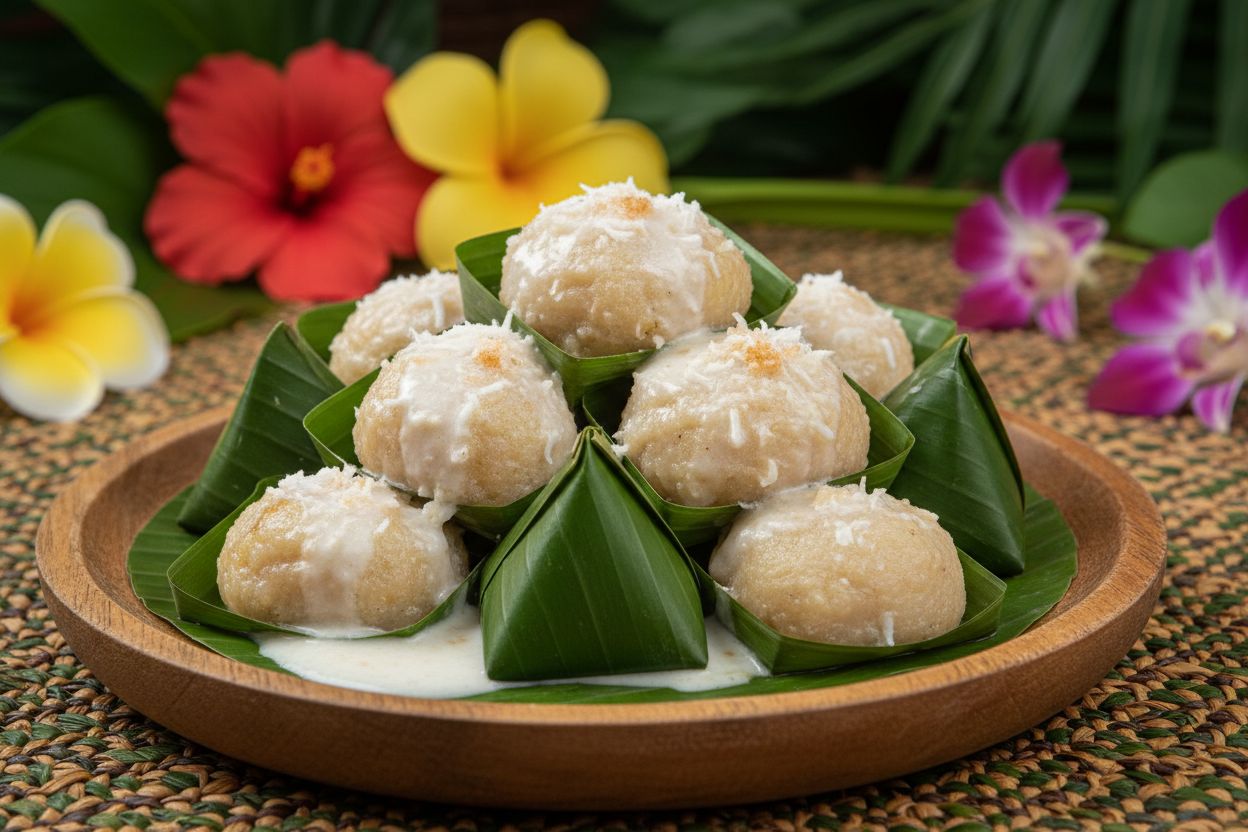



Saksak
Background
Saksak is a heritage dumpling from the northern islands and river villages of Papua New Guinea made primarily from sago starch, shaped on fresh banana leaves, gently cooked, and served with a simple sauce built on coconut milk. Many communities prepare it for gatherings because the base of sago starch and the aroma of warm banana leaves deliver comfort and sustenance, while a drizzle of sweetened coconut milk and a touch of brown sugar turn it into a celebratory bite. Some cooks lightly perfume the dough with mashed ripe banana for fragrance and gentle sweetness, and a pinch of salt keeps the flavors balanced. The method is straightforward and relies on texture cues rather than strict timing, making it well suited to home kitchens equipped with a sturdy pot, hot water, and smooth, flexible banana leaves.
Ingredients
Preparation
- Prepare the wrappers: pass a clean flame quickly under large pieces of banana leaves or pour hot water over them so they become pliable and glossy. Wipe both sides dry. Cut rectangles wide enough to hold a small log of dough. Keep extra banana leaves for lining the pot.
- Make the mash: in a bowl, thoroughly mash ripe banana until smooth. Stir in a pinch of salt to brighten the flavor.
- Form the dough: sprinkle sago starch into the bowl with the mashed ripe banana. Moisten gradually with small splashes of warm water, mixing with your fingers to create a pliable, slightly tacky mass. If it crumbles, add a bit more water; if it feels loose, add a little more sago starch. Season with another tiny pinch of salt if desired.
- Shape: place a strip of dough on a piece of softened banana leaves and roll it into a short log. Fold the sides of the banana leaves over the dough and tuck the ends to secure. Repeat with remaining dough.
Cooking
- Set up the pot: line the bottom with spare banana leaves. Add enough water to create gentle bubbling that reaches the packets without splashing over their tops. Place the wrapped logs in a single layer.
- Cook gently: keep the heat so the water maintains a steady, gentle movement. The dumplings are ready when the logs feel firm to the touch and the dough inside looks translucent at the edges where the banana leaves meet the mixture.
- Make the sauce: while the logs finish, warm coconut milk with brown sugar and a small pinch of salt, stirring until the brown sugar dissolves and the coconut milk thickens slightly. For a richer finish, reduce just until glossy.
- Unwrap: lift the packets, drain any clinging water, and rest briefly. Unwrap the banana leaves to reveal the glistening dumplings.
Serving and Enjoying
Serve warm dumplings with a generous spoon of the warm sauce made from coconut milk and brown sugar. The subtle sweetness from the mashed ripe banana, the earthy depth of sago starch, and the perfume of banana leaves come together best when the dumplings are freshly unwrapped. If you prefer a lighter finish, drizzle a thinner stream of warm coconut milk and sprinkle a touch more salt for contrast.
Tips and Variations
- Sweetness: adjust the sauce by increasing or reducing brown sugar, keeping enough salt to balance.
- Texture: for a firmer bite, work in a little extra sago starch. For a softer interior, add a small splash more water.
- Sauce body: simmer the coconut milk briefly for a thicker glaze or keep it just warmed for a lighter pour.
- Leaf aroma: always use freshly softened banana leaves to infuse gentle fragrance and prevent sticking.
Storage
Refrigerate leftover dumplings wrapped in clean banana leaves or a covered container. Reheat by steaming with a little water in the pot until supple, then rewarm a small amount of coconut milk with a pinch of brown sugar and a dot of salt for serving.