
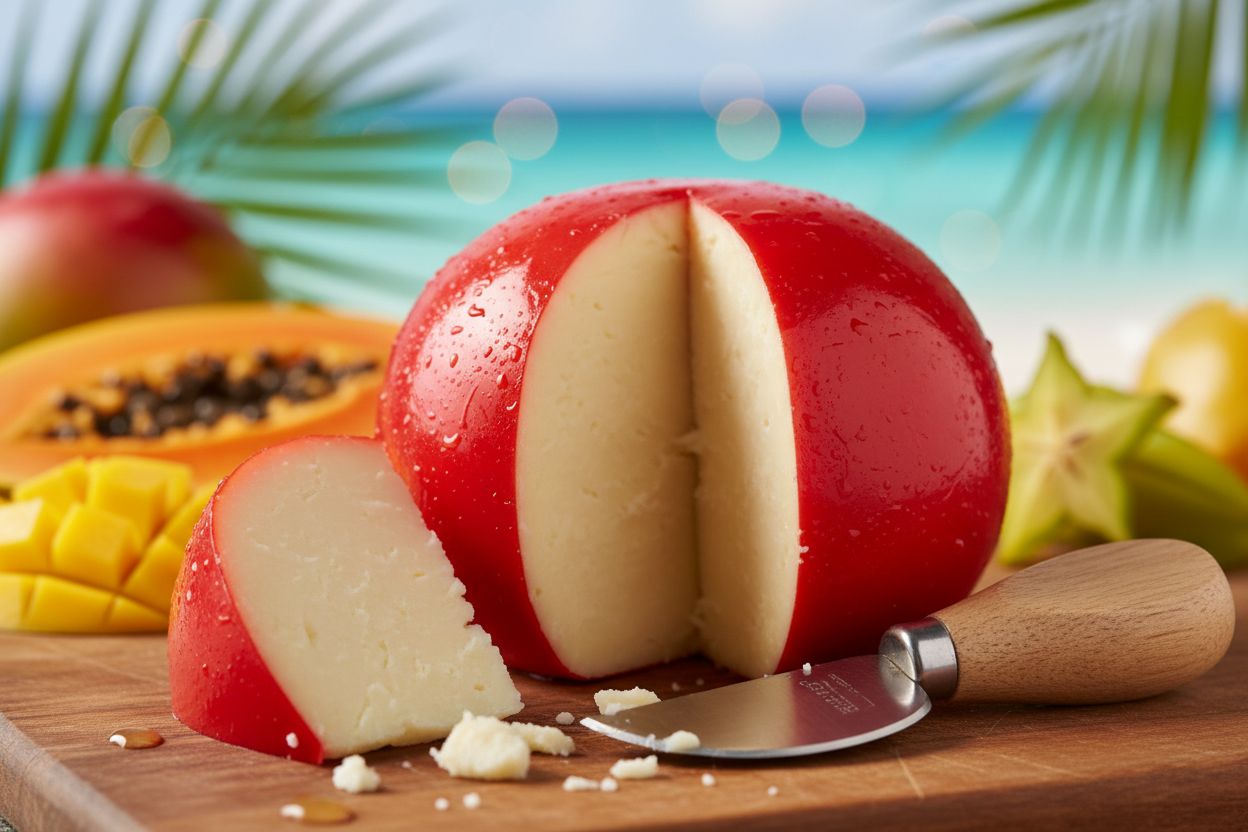



St. Croix Red Ball Cheese
Background
St. Croix Red Ball Cheese is a home-cheesemaking spin on the classic red-coated, semi-hard island favorite that traces its lineage to European traders who carried sturdy, travel-ready wheels across warm seas. Over time, Caribbean makers shaped the style into compact round forms encased in a signature crimson shell, prized for a clean, buttery body and a mellow, slightly nutty finish. This approachable recipe guides you from pot to polished ball, ready for a bright red coat and a patient rest that develops gentle aroma, sliceable texture, and picnic-friendly charm.
Ingredients
- milk — 2 gallons, preferably pasteurized (not ultra-pasteurized), high quality
- mesophilic-culture — direct-set starter, per package dose for 2 gallons
- calcium-chloride — diluted per manufacturer directions for pasteurized milk
- rennet — single-strength, diluted per label for 2 gallons
- annatto — optional, for a warm golden interior
- salt — non-iodized; for brine and light finishing
- wax — red cheese coating for sealing and aging
Equipment
- Large nonreactive pot (capacity for 2 gallons) with thermometer
- Curd knife or long offset spatula, ladle, and slotted spoon
- Cheesecloth or butter muslin and a round mold (Edam or similar)
- Cheese press capable of gentle to moderate pressure
- Nonreactive container for brining and a drying rack
- Brush or dedicated pot for melting coating and a food-safe aging space
Method
- Warm and prepare the base: Pour the milk into a sanitized pot and slowly warm to a gentle mesophilic range (about 86°F/30°C), stirring to prevent scorching. Stir in the pre-diluted calcium-chloride. If desired, add annatto drop by drop for a pale amber hue. Sprinkle the mesophilic-culture evenly over the surface, allow it to rehydrate for a minute, then stir with up-and-down strokes. Let the culture work for 45 minutes.
- Coagulate: Stir in the properly diluted rennet with gentle, steady motions for about 1 minute, then stop movement. Allow a clean set to form, undisturbed, for 45 minutes, or until the curd shows a clean break.
- Cut and cook the curd: Using a curd knife, cut the curd into roughly 1/2-inch cubes. Let them rest to heal for 5 minutes. Slowly raise the temperature to about 100–102°F (38–39°C), stirring steadily so the curds stay separate, over 30 minutes, until the curds feel springy and moderately firm.
- Drain and form: Allow curds to settle briefly, then ladle into a cloth-lined round mold. Press lightly to expel whey and smooth the surface. Press under gentle pressure for 30 minutes, flip, re-dress, and press at moderate pressure for another 6 hours, aiming for a tight, even wheel with minimal trapped moisture.
- Brine: Mix a cool, saturated brine using clean water and plenty of salt. Submerge the wheel completely for 12 hours, turning once halfway through so the rind seasons evenly. After brining, pat dry, then lightly wipe the surface to remove excess salt.
- Dry: Place the wheel on a rack in a cool, well-ventilated spot until the surface is dry to the touch, typically 1–2 days.
- Seal: Warm the wax carefully in a dedicated pot, then brush or dip to fully coat the wheel in a smooth, even red shell. Apply a second coat of wax once the first has set, ensuring the entire ball is sealed.
- Age: Rest the sealed wheel at 52–55°F (11–13°C) with moderate humidity for about 4–6 weeks, turning periodically so moisture distributes evenly and the paste matures into a supple, sliceable texture.
Tasting and pairing
Slice into the bright dome for a gentle, buttery aroma and a clean, slightly nutty flavor. It pairs well with tropical fruit, crusty bread, and light, crisp beverages. For a picnic board, balance with something tart and fresh, plus a drizzle of honey or a spoon of tangy chutney to frame the mellow richness.
Tips for success
- Maintain slow, steady temperature changes during cooking to keep curds springy and avoid a pasty interior.
- Keep your press pressure moderate; gradual, even pressing helps achieve the signature compact, ball-ready form.
- Ensure the surface is dry before applying the wax so the seal adheres cleanly and guards against unwanted moisture or air pockets.